
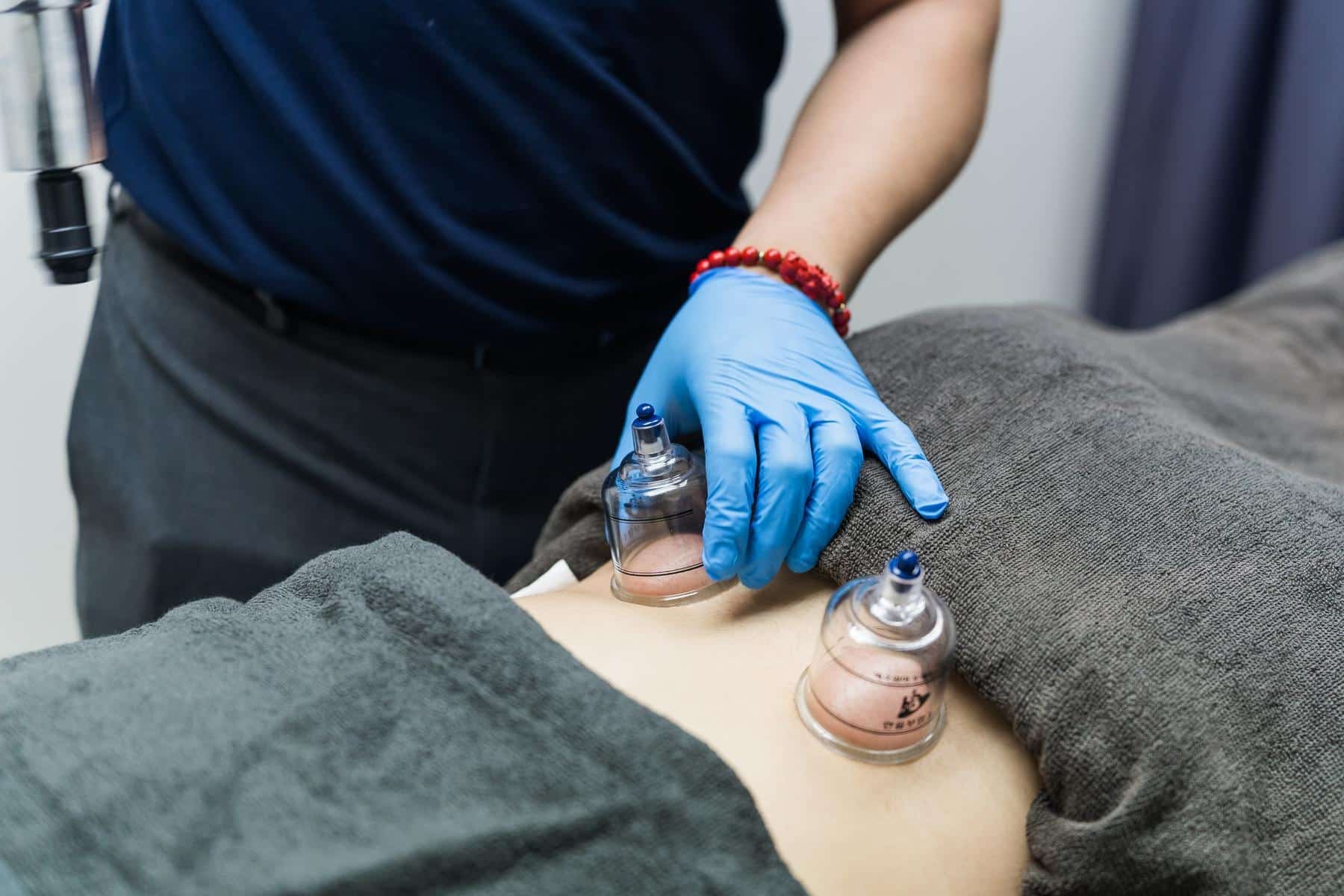
Physiotherapist demonstrating exercise technique or patient assessment in clinical environment. Shows therapeutic instruction, hands-on guidance, treatment demonstration, and professional expertise. Keywords: exercise demonstration, therapeutic instruction, patient guidance, clinical treatment, professional expertise, rehabilitation technique.
Techniques

Cupping Therapy

Cupping therapy is a physiotherapy technique that uses negative pressure to lift soft tissue and support muscle recovery, circulation, and pain reduction.

Book Now
Overview

How It Works

Cupping therapy applies controlled negative pressure using cups placed on specific areas of the body. The suction lifts the skin and underlying soft tissue away from deeper structures.

This mechanical effect increases local blood circulation and promotes fluid exchange within the treated tissue. It also influences fascial layers, which may reduce tissue adhesion and improve mobility in restricted areas.

The technique can be applied in static form, where cups remain fixed in one position, or in dynamic form, where cups are moved along muscle lines during treatment. Both methods are selected based on clinical assessment and treatment goals.


All techniques are performed with the consent of the patient, after evaluating individual needs and discomfort tolerance.

Benefits

What You Can Expect

Improved blood circulation

Cupping therapy increases local blood flow, which supports tissue oxygenation and recovery.

Reduced muscle tightness

Negative pressure helps release fascial restrictions and decreases muscle stiffness.

Enhanced recovery

The technique supports recovery from overuse injuries and muscular fatigue.

Improved mobility

It assists in restoring soft tissue flexibility and joint movement.

Complementary treatment effect

It enhances the outcomes of physiotherapy interventions such as manual therapy and exercise therapy.

Your Experience

What to Expect

Cupping therapy begins with a clinical assessment of muscle tension, pain distribution, and movement restriction. The physiotherapist selects appropriate treatment areas and determines the type of cupping technique to be used.

During application, cups are placed on the skin and create a pulling or pressure sensation. The intensity varies depending on suction level and tissue condition. The cups remain in place for several minutes, or may be moved if dynamic cupping is used.

After treatment, circular marks or redness may appear on the skin due to increased local blood flow and capillary response. These marks are temporary and typically fade within a few days. Normal daily activities can usually continue after the session unless otherwise advised based on individual response.

See Us In Action

Get Started

Try Cupping Therapy

Our team will build a personalised plan around your needs.

Book Now